7 Digital Marketing Strategies Every Small Business Should Use in 2026
Introduction
Getting attention online is no longer enough.
A business can have a website, an Instagram page, Google Ads, and hundreds of social media followers—and still struggle to generate consistent leads and sales.
Why?
Because successful digital marketing isn’t about being everywhere. It’s about reaching the right audience, with the right message, on the right platform, at the right time.
In 2026, customer journeys are becoming more complex. People may discover a brand through a short-form video, search for it on Google, read reviews, visit the website, compare competitors, and only then decide whether to buy.
That means businesses need a connected digital marketing strategy rather than isolated campaigns.
Whether you’re a startup, local business, freelancer, e-commerce brand, or established company, the following 7 digital marketing strategies for 2026 can help you improve visibility, attract qualified customers, build trust, and increase conversions.
Let’s look at each strategy—and, more importantly, how you can actually use it.
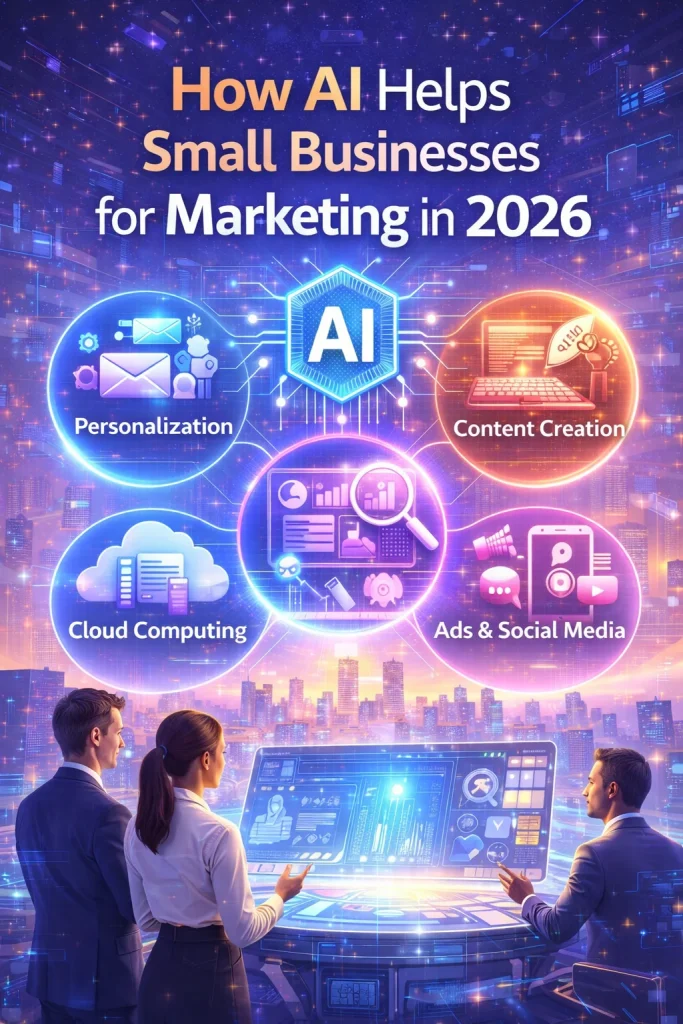
1. Use AI to Make Your Marketing More Personal
Artificial intelligence is changing how businesses create, analyze, and distribute marketing content.
But using AI effectively doesn’t mean generating hundreds of generic posts.
The real opportunity is using AI to understand your audience and create more relevant customer experiences.
For example, a clothing brand could use customer behavior to recommend products based on previous purchases. A service business could segment leads according to their interests and send different follow-up messages.
How to use AI in your digital marketing strategy
You can use AI to:
- Generate content ideas based on customer questions
- Analyze customer behavior
- Segment audiences
- Personalize email campaigns
- Create advertising variations
- Analyze campaign performance
- Automate repetitive marketing tasks
- Develop customer FAQs and chatbot responses
However, don’t let automation remove the human element from your brand.
AI should help your marketing team work faster—not make your communication sound robotic.
Pro tip
Before using AI, define your audience clearly.
Ask:
Who are they? What problem are they trying to solve? What prevents them from purchasing?
The better your customer information, the more useful your AI-assisted marketing becomes.
2. Make Short-Form Video a Core Content Strategy
If your brand isn’t creating short-form video yet, 2026 is a good time to start. - Instagram Reels, YouTube Shorts, and other short-form formats allow businesses to communicate ideas quickly while making their brands more discoverable.
- But there’s one mistake businesses repeatedly make:
- They turn every video into an advertisement.
- People don’t open social media because they want to watch commercials.
- They want to learn something, solve a problem, laugh, discover something new, or be entertained.
- Try these short-form video ideas
- For a digital marketing agency:
- “3 reasons your Instagram isn’t generating leads”
- “Stop boosting every post”
- “SEO mistakes small businesses make”
- “Google Ads vs Instagram Ads”
- “One marketing strategy your competitors aren’t using”
- For a restaurant:
- Behind-the-scenes videos
- Customer reactions
- Food preparation
- Chef tips
- New menu launches
- For an e-commerce business:
- Product demonstrations
- Before-and-after videos
- Customer reviews
- Unboxing videos
- Frequently asked questions
- A simple video formula
- Try:
- Hook → Problem → Solution → CTA
- For example:
“Getting Instagram views but no customers? Here’s probably why…”
Then explain the problem, provide a useful solution, and finish with a simple call to action.
The goal isn’t simply to get views.
The goal is to turn attention into trust and trust into action.
3. Build an SEO Strategy Around Customer Search Intent
SEO remains an important part of long-term digital marketing because customers still use search engines to discover information, products, services, and businesses.
But SEO in 2026 shouldn’t mean stuffing the same keyword into every paragraph.
Instead, create content that genuinely answers what your target customer is searching for.
Google’s current guidance emphasizes helpful, reliable, people-first content and specifically advises creators to avoid simply producing content for search-engine traffic. - Start with search intent
- Suppose you run a digital marketing agency.
- Someone searching:
- “What is digital marketing?”
- is probably looking for information.
- Someone searching:
- “best digital marketing agency in Pune”
- has much stronger commercial intent.
- Someone searching:
- “hire digital marketing agency Pune”
- may be even closer to making a decision.
- Your content strategy should address all these stages.
- Create different types of SEO content
- Informational content
- What is digital marketing?
- How does SEO work?
- What is content marketing?
- Commercial content
- Best digital marketing agency for small businesses
- SEO services for startups
- Social media marketing agency
- Transactional content
- Hire an SEO agency
- Get a digital marketing consultation
- Digital marketing services
- Don’t forget on-page SEO
- Optimize:
- Page title
H1 heading
H2 and H3 headings
Meta description
URL
Image alt text
Internal links
Relevant keywords
Readability
Most importantly, make the page genuinely useful.
Google’s SEO guidance notes that useful, compelling, well-organized and unique content is more valuable than trying to find a secret formula for ranking.
4. Turn Content Marketing Into a Customer Acquisition System
Posting content randomly isn’t a content strategy. - If your business posts a motivational quote on Monday, a product image on Wednesday, and a promotional post on Friday without a clear purpose, your audience may see your content—but not understand why they should choose your business.
- Instead, create content around your customer’s journey.
- Use the 3-stage content framework
- TOFU — Awareness
- Your audience is discovering a problem.
- Create:
- Educational reels
- Blog posts
- Infographics
- Beginner guides
- Industry tips
- MOFU — Consideration
- Your audience understands the problem and is evaluating solutions.
- Create:
- Case studies
- Comparisons
- Webinars
- Detailed guides
- Customer testimonials
- BOFU — Conversion
- Your audience is ready to take action.
- Create:
- Service pages
- Free consultations
- Product demonstrations
- Offers
- Testimonials
- Pricing information
- This approach transforms content from “something we post” into a marketing funnel.
- Ask yourself before publishing
- What should the reader do after consuming this content?
If you don’t have an answer, the content probably needs a clearer purpose.
5. Automate Repetitive Marketing Tasks
Marketing can become extremely time-consuming when every task is performed manually.
Imagine having to manually:
Send every follow-up email
Schedule every social post
Track every lead
Update every customer
Generate every report
Automation can reduce repetitive work and give businesses more time to focus on strategy and customers.
Marketing tasks you can automate - Email sequences
- Lead follow-ups
- Appointment reminders
- Social media scheduling
- Customer onboarding
- Lead notifications
- Reporting
- Audience segmentation
- For example:
- Website visitor → Lead form → Automated email → Sales follow-up → Conversion
- Instead of manually managing every step, automation can connect the process.
- But don’t automate everything
- A customer should never feel like they’re talking to a machine at every stage.
- Use automation for repetitive processes and human interaction for situations requiring empathy, creativity, negotiation, or personal attention.
- 6. Build a Brand Community Instead of Only Chasing Followers
- Followers are useful.
- But loyal customers are more valuable.
- A business with 2,000 highly engaged followers can sometimes outperform a business with 100,000 passive followers.
- Community-driven marketing focuses on creating conversations around your brand.
- How to build a community
- Encourage your audience to:
- Ask questions
- Share experiences
- Comment on posts
- Submit user-generated content
- Participate in polls
- Join webinars
- Attend live sessions
- Share feedback
- You can also create recurring content formats.
- For example:
- Monday: Marketing Tip
- Wednesday: Industry Insight
- Friday: Customer Story
- Consistency gives people a reason to return.
- Don’t make every post about selling
- Use the 80/20 principle as a starting point:
- 80% valuable or educational content
- 20% promotional content
- You don’t need to follow this ratio rigidly, but it is a useful reminder that audiences
- need value before they respond to promotional messages.
7. Use Data to Decide What to Do Next
One of the biggest digital marketing mistakes is making decisions based on assumptions.
A business owner might say:
“Instagram isn’t working.”
But what does “not working” actually mean?
Are you getting:
Low reach?
Low engagement?
Website traffic?
Leads?
Sales?
Poor-quality leads?
These are very different problems. - Track the right marketing KPIs
- Depending on your objective, monitor:
- Awareness
- Reach
- Impressions
- Video views
- Brand searches
- Engagement
- Likes
- Comments
- Shares
- Saves
- Engagement rate
- Website performance
- Organic traffic
- Landing-page visits
Bounce/engagement metrics
Conversion rate
Lead generation
Number of leads
Cost per lead
Lead-to-customer rate
Advertising
CTR
CPC
Conversion rate
Cost per acquisition
ROAS
Don’t track metrics simply because they’re easy to find.
Track the numbers that help you make better business decisions.
Bonus Strategy: Connect Your Channels Instead of Marketing Them Separately - Here’s where many businesses fall short.
- They run SEO separately.
- Social media separately.
- Paid advertising separately.
- Email marketing separately.
- Content separately.
- But your customer doesn’t experience your marketing in separate departments.
- They experience one brand.
- For example:
- Instagram Reel → Website → Blog → Retargeting Ad → Email → Purchase
- That’s a connected customer journey.
- Your goal should be to make these channels support one another.
How to Choose the Right Digital Marketing Strategies for Your Business
You don’t need to implement all seven strategies at once.
Start with your biggest business problem.
Your Main Problem
Strategy to Prioritize
Low brand awareness
Short-form video + social media
Low organic traffic
SEO + content marketing
Poor lead follow-up
Marketing automation
Low customer engagement
Community marketing
Poor conversions
Personalization + CRO - Marketing decisions based on guesses
Data-driven marketing
Limited marketing resources
AI + automation
Start with 2–3 strategies, measure the results, and expand from there.
Common Digital Marketing Mistakes to Avoid in 2026
Even a good strategy can fail when execution is poor.
Avoid these mistakes:
1. Trying to be on every platform
You don’t need to use every social network.
Choose platforms where your customers actually spend time. - 2. Creating content without a goal
- Every piece of content should have a purpose.
- 3. Chasing followers instead of customers
- A large audience doesn’t automatically mean more revenue.
- 4. Ignoring SEO
- Social media reach can fluctuate, but a strong organic search presence can continue bringing relevant visitors over time.
- 5. Focusing only on traffic
- Traffic is useful only when it contributes to your business objectives.
- 6. Using AI without human review
- AI-generated content still needs strategy, fact-checking, editing, and a genuine brand voice.
- 7. Never analyzing campaign results
- If you don’t measure your marketing, you can’t confidently improve it.
A Simple 2026 Digital Marketing Framework
If you’re overwhelmed by all the available marketing channels, use this simple framework:
Step 1: Attract
Use:
SEO + short-form video + valuable content
to attract your target audience.
Step 2: Educate - Use:
- Blogs + guides + social content + email
- to demonstrate your expertise.
- Step 3: Build Trust
- Use:
- Reviews + testimonials + case studies + community
- to reduce customer hesitation.
- Step 4: Convert
- Use:
- Landing pages + offers + lead forms + calls to action
- to turn visitors into leads or customers.
- Step 5: Retain
- Use:
- Email + personalization + customer service + community
to turn customers into repeat buyers and advocates.
Step 6: Measure
Use:
Analytics + conversion data + campaign reporting
to identify what’s working and improve your strategy.
Final Thoughts
Digital marketing in 2026 isn’t about finding one magical strategy.
It’s about building a system where different channels work together.
Use AI to make marketing more efficient and relevant. - Use short-form video to capture attention.
Use SEO to build long-term visibility.
Use content marketing to educate your audience.
Use automation to save time.
Build a community to strengthen customer relationships.
And use data to understand what is actually producing results.
The businesses that succeed won’t necessarily be the ones that publish the most content or spend the most money.
They’ll be the businesses that understand their customers, create genuine value, test what works, and continuously improve.
Start with one strategy. Measure it. Improve it. Then build from there.
Frequently Asked Questions
What are the best digital marketing strategies for 2026?
Some of the most useful digital marketing strategies for 2026 include AI-powered personalization, SEO, short-form video, content marketing, marketing automation, community building, and data-driven decision-making. - Is digital marketing still effective for small businesses?
- Yes. Digital marketing can help small businesses build visibility, reach specific audiences, generate leads, and develop customer relationships. The key is choosing channels that match the business’s audience and objectives.
- Is SEO still important in 2026?
- Yes. SEO remains an important way to help customers discover relevant websites and content through search. Businesses should focus on useful, original, well-organized content rather than keyword stuffing. Google’s current guidance emphasizes helpful, people-first content.
- How can AI help with digital marketing?
- AI can assist with content ideation, audience analysis, personalization, campaign analysis, customer segmentation, and repetitive marketing tasks. Human oversight remains important for accuracy, strategy, brand voice, and quality.
- What is the most effective digital marketing strategy?
- There isn’t one strategy that works for every business. The best approach depends on your audience, industry, budget, objectives, and customer journey. A combination of SEO, content, social media, paid advertising, automation, and analytics can create a stronger overall marketing system.
- How much should a small business spend on digital marketing?
- There is no universal budget. Start with a budget your business can sustain, define a measurable objective, test your campaigns, and increase spending when the data shows that the campaign is producing profitable results.
- How long does digital marketing take to produce results?
- The timeframe depends on the channel. Paid advertising can produce results relatively quickly, while SEO and content marketing generally require consistent effort and time to build visibility. Focus on measuring meaningful progress rather than expecting every channel to deliver results immediately.
Ready to Improve Your Digital Marketing?
Your customers are already searching, scrolling, comparing, and making decisions online.
The question is:
Will they find your business when they’re ready to buy?
A well-planned digital marketing strategy can help you attract the right audience, build trust, and turn online attention into measurable business growth.
Start building your 2026 digital marketing strategy today.
SEO implementation checklist for your WordPress page
Primary keyword: digital marketing strategies
Secondary keywords: digital marketing strategies 2026, digital marketing for - small businesses, online marketing strategies, small business marketing strategies, digital marketing tips
- Recommended article length: ~2,500–3,000 words
- Use the primary keyword naturally in the SEO title, H1, introduction, one or two H2s, URL, and meta description.
- Add relevant internal links to your SEO, social media marketing, Google Ads, content marketing, and digital marketing service pages.
- Add 1–2 authoritative external references where appropriate.
- Add an author bio/byline demonstrating your marketing expertise.
- Add original visuals, such as a “2026 Digital Marketing Strategy Framework” graphic.
- Add FAQ structured data only if the visible page content qualifies for it; don’t add markup simply to manipulate search results.
- Optimize images and keep the page fast and mobile-friendly.
- Add a clear CTA rather than ending the article with only generic information.
- Google specifically recommends clear organization, unique and useful content, relevant search terms, and people-first content.
- Most importantly: don’t try to beat the competitor by making a slightly longer version of the same article. Beat it by making your article more actionable, more specific to small businesses, better structured, and more useful after someone finishes reading it. Google explicitly says there is no preferred word count; quality and usefulness matter more than hitting an arbitrary length.